Arthritis becomes increasingly common as we get older, and for many seniors it means dealing with stiff or uncomfortable joints on a regular basis.
That has also made CBD creams and other topical products popular with older adults looking for something they can apply directly to areas such as the hands, knees, shoulders and feet.
At Quiet Monk CBD, seniors have been an important part of our customer base for years. I’ve also seen this personally in my own family.
My father had rheumatoid arthritis, and watching him is one of the reasons I understand why older customers are often interested in topical products.
But there’s an important distinction I want to make:
CBD cream is not an FDA-approved treatment for arthritis.
Research into topical CBD is still developing, so I don’t believe CBD companies should promise that a cream will treat arthritis or make someone’s arthritis go away.
What I can do is explain what we know, what we don’t know, what my family experienced, and what seniors should consider when comparing CBD topicals.
My Father’s Experience With CBD Cream
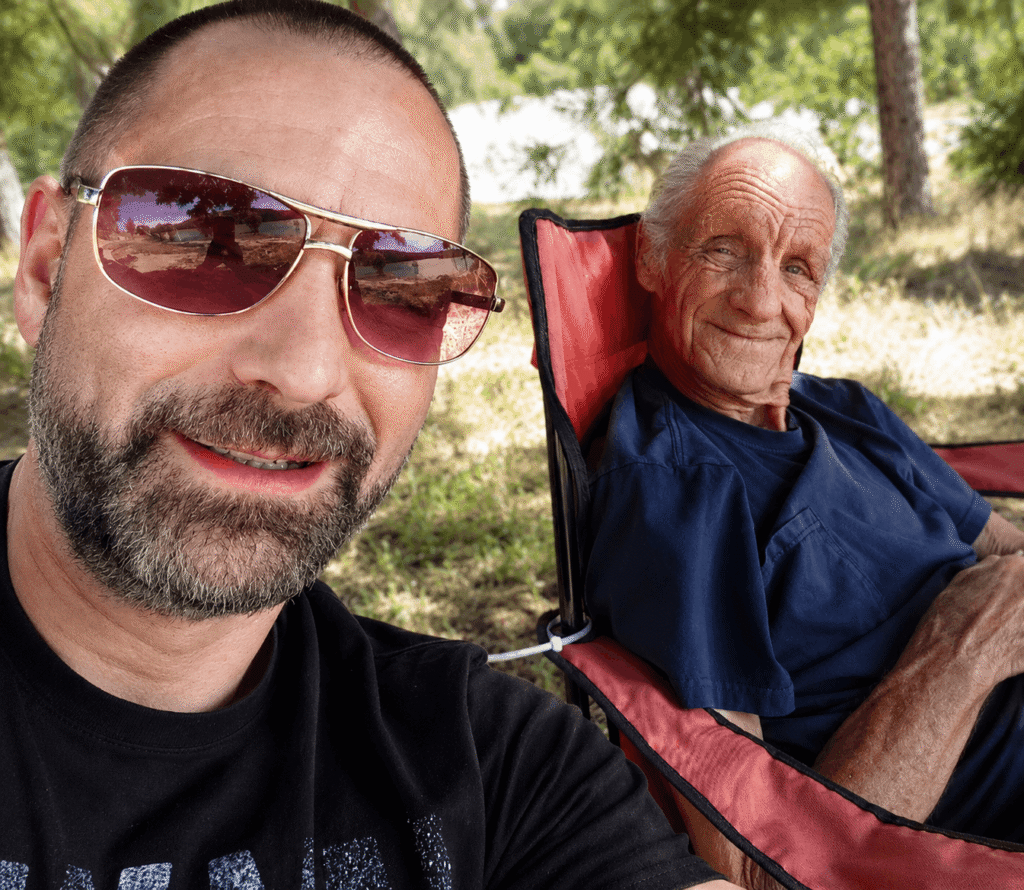
My father suffered from rheumatoid arthritis.
At night, discomfort and cramping in his legs could become bad enough to wake him from his sleep.
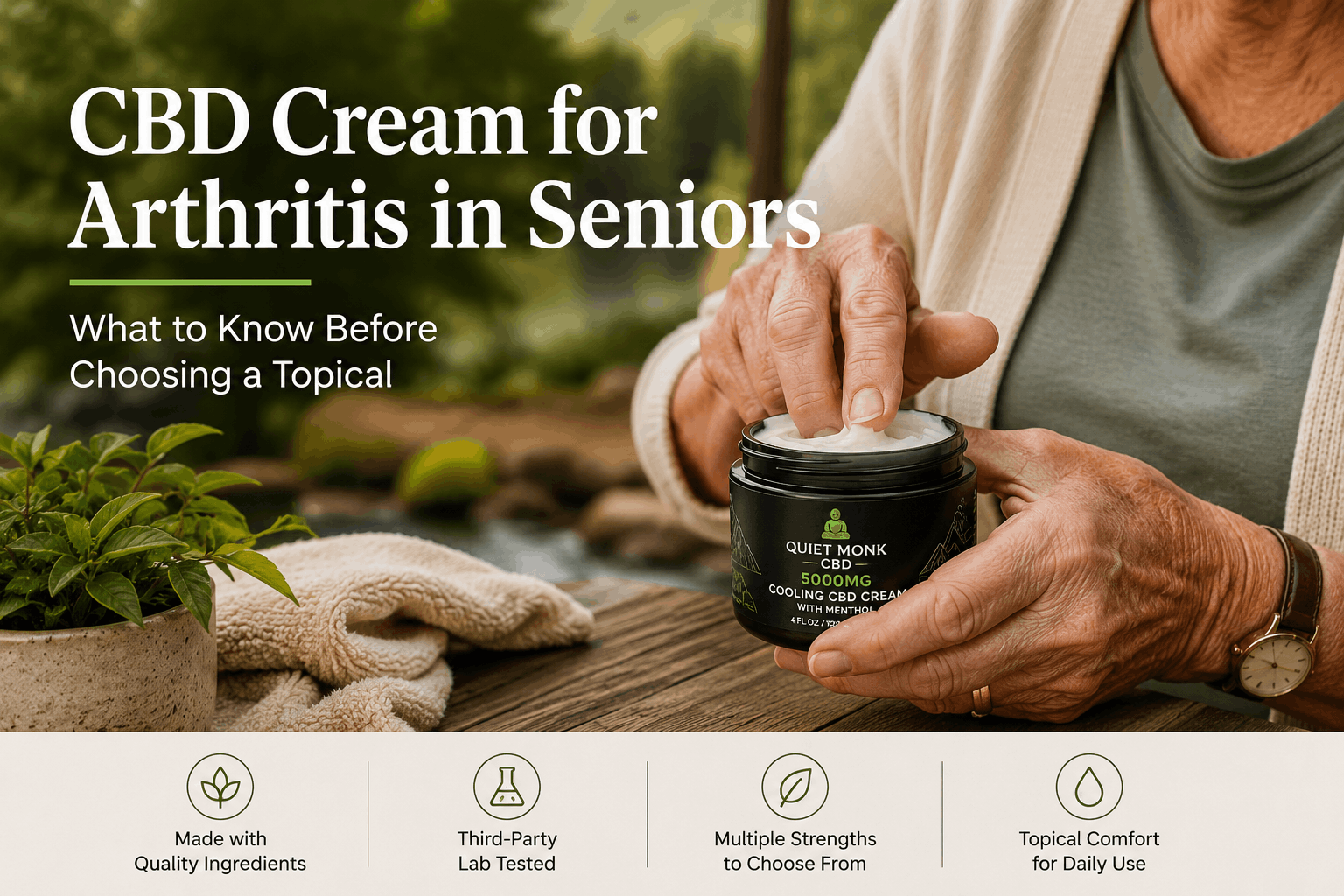
His favorite product from Quiet Monk was our 5,000mg Cooling CBD Cream.
He kept the jar beside his bed so it was within reach when he wanted it. He liked rubbing the cream into his legs, and the cooling sensation was something he particularly enjoyed.
I think this story is important because it’s real.
I’m not presenting my father’s experience as proof that CBD treats rheumatoid arthritis. One person’s experience can’t establish that.
But after years of talking directly with customers, I’ve learned that seniors can have very different preferences when it comes to topical products.
Some love a strong cooling sensation.
Others don’t want menthol at all.
Some prefer a lighter cream that spreads easily, while others prefer a thicker salve.
That’s why I don’t think choosing a CBD topical should simply come down to finding the biggest milligram number on the label.
What Does Research Say About Topical CBD and Arthritis?
Research on CBD and arthritis is still limited, particularly when we’re talking specifically about CBD applied to the skin.
One small randomized controlled trial published in The Journal of Hand Surgery studied 18 people with symptomatic thumb basal-joint arthritis.
Participants used either a topical CBD preparation or a control containing shea butter before switching treatments.
The researchers reported improvements in patient-reported pain and disability measurements during the CBD treatment period.
That’s interesting, but it was a very small study involving a specific CBD formulation and a specific type of arthritis. It doesn’t prove that every CBD cream will work for arthritis.
Other CBD research involving arthritis has produced less encouraging results.
For example, a randomized placebo-controlled study involving people with hand osteoarthritis or psoriatic arthritis did not find a significant reduction in pain from orally administered synthetic CBD compared with placebo.
The takeaway is fairly simple:
There is research worth following, but we don’t yet have enough evidence to say that over-the-counter CBD creams are proven treatments for arthritis.
That’s why we’re careful about making promises.
Why Do Some Seniors Choose Topical CBD Products?
One practical advantage of a topical product is simply where and how it’s used.
A cream or salve can be rubbed directly onto a particular area rather than swallowed.
Someone interested in a topical might apply it to areas such as:
- Hands and fingers
- Knees
- Shoulders
- Feet
- Elbows
- Neck
- Lower back
There are also different product formats available.
Creams tend to spread easily. Salves are generally thicker. Cooling products can create a noticeable cooling sensation, while non-cooling formulations may be preferable for people who dislike menthol.
Those differences can matter just as much as CBD strength.
What Should Seniors Look for in a CBD Cream?
If you’re comparing CBD topicals, I recommend looking beyond the number on the front of the jar.
1. CBD Strength
A 1,000mg product and a 10,000mg product aren’t the same concentration simply because they’re both called “CBD cream.”
Look at the total CBD content and the size of the container.
That’s especially important when comparing products from different companies.
2. Cooling vs. Non-Cooling
Menthol creates a cooling sensation that some customers really enjoy.
My father was one of them.
But menthol isn’t for everyone.
If you’re sensitive to cooling ingredients or simply don’t like the sensation, look for a non-cooling formulation instead.
3. The Complete Ingredient List
Don’t shop based solely on CBD.
Read the complete ingredient list, particularly if you have sensitive skin or known ingredient sensitivities.
4. Third-Party Lab Testing
This is one of the biggest things I recommend checking.
Look for a current Certificate of Analysis, or COA, from an independent laboratory.
The report can help you verify how much CBD was detected and what other cannabinoids were found in the tested product.
At Quiet Monk CBD, we make our third-party lab reports available for customers to review.
5. Container Size
This is frequently overlooked.
5,000mg in four ounces is different from 5,000mg in one ounce.
When you’re comparing CBD strengths, concentration matters.
Is Stronger CBD Cream Always Better for Seniors?
Not necessarily.
I’ve never believed everyone needs our strongest product simply because we make one.
Quiet Monk offers several different strengths because customers have different preferences.
Someone trying a CBD topical for the first time may make a different choice than someone who has been using high-strength topicals for years.
That’s why we’ve created a separate CBD Cream Strength Comparison Guide explaining how the different concentrations compare.
The goal should be understanding what you’re buying rather than assuming that the highest number is automatically the right choice.
Cooling CBD Cream vs. Regular CBD Cream
This is another question we hear frequently.
The difference isn’t simply CBD.
Cooling formulations contain ingredients that create a cooling sensation on the skin. Menthol is one of the most common examples.
Some seniors really like that sensation, particularly after physical activity or at the end of the day.
Others prefer a regular cream without the cooling effect.
Neither preference is wrong.
My father happened to prefer cooling cream. Another customer might strongly prefer non-cooling.
Talk With Your Healthcare Provider
This is particularly important for older adults.
Seniors are more likely to take multiple medications or have health conditions that require ongoing care.
CBD can interact with certain medications, particularly when CBD is taken orally. If you’re considering CBD and take prescription medications, discussing it with your physician or pharmacist is a sensible precaution.
And CBD shouldn’t replace treatment prescribed for arthritis or another medical condition.
What I’ve Learned From Seniors Who Use Our Products
After years of running Quiet Monk CBD, I’ve learned that older customers usually aren’t looking for complicated explanations about cannabinoids.
They tend to ask very practical questions:
How strong is it?
Does it have menthol?
How much should I apply?
What’s actually in it?
Has it been lab tested?
What’s the difference between this cream and the stronger one?
Those are good questions.
They’re also the questions I think CBD companies should answer clearly.
My father’s preference happened to be our 5,000mg Cooling Cream. Your preference may be completely different.
The important thing is knowing what you’re purchasing, understanding what CBD can and cannot be claimed to do, and choosing a product based on its formulation, strength, ingredients and testing rather than exaggerated promises.
Frequently Asked Questions
Is CBD cream proven to treat arthritis?
No. Over-the-counter CBD creams are not FDA-approved treatments for arthritis. There has been some encouraging research involving topical CBD, including a small study involving thumb-joint arthritis, but substantially more research is needed.
Will CBD cream make arthritis go away?
CBD companies should not promise this. Arthritis is a medical condition, and CBD topicals should not be presented as a cure or replacement for appropriate medical treatment.
What’s the difference between cooling and non-cooling CBD cream?
Cooling products contain ingredients such as menthol that create a cooling sensation on the skin. Non-cooling creams don’t provide that same effect.
Should seniors buy the strongest CBD cream available?
Not automatically. Consider concentration, container size, ingredients, product type and personal preference rather than choosing solely by the largest milligram number.
How can I tell whether a CBD cream actually contains the amount on the label?
Look for third-party laboratory testing. A Certificate of Analysis can show the cannabinoid concentrations detected in the tested sample.
Final Thoughts
CBD cream has become popular among seniors, including people living with arthritis, but I think it’s important to separate personal experiences from proven medical results.
My father had rheumatoid arthritis and genuinely liked using our 5,000mg Cooling CBD Cream. That’s his experience, and I’m comfortable sharing it as exactly that.
At the same time, I won’t tell you that his experience proves CBD treats arthritis.
Research into topical CBD continues, and there are some interesting early findings. Until considerably more evidence is available, consumers should be skeptical of companies promising that CBD will cure arthritis, replace medication or work for everyone.
At Quiet Monk CBD, we’d rather tell you what we know, explain our products clearly and let you make an informed decision.
This article is for educational purposes only and is not intended to diagnose, treat, cure or prevent any disease. CBD products have not been evaluated or approved by the FDA to treat arthritis.