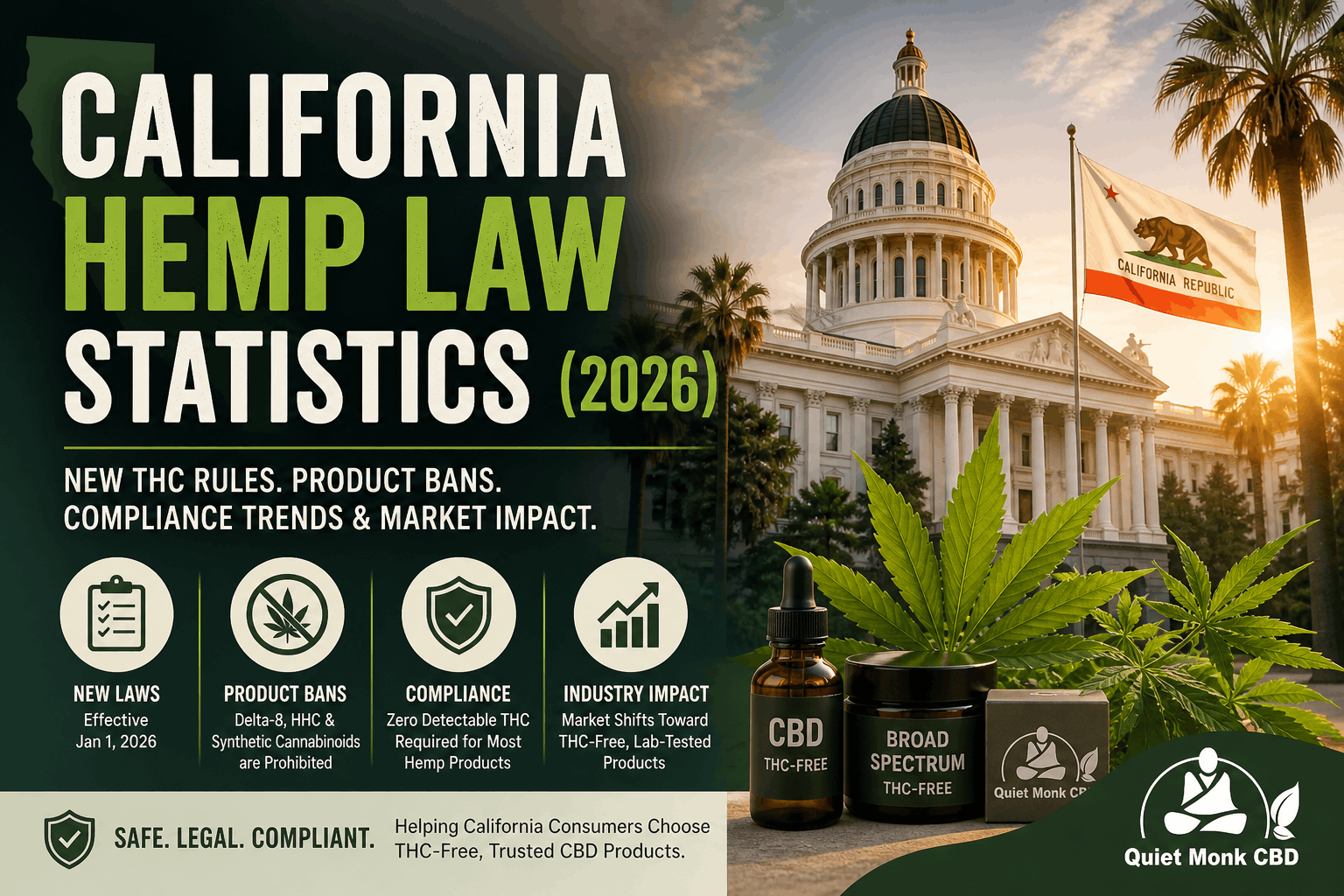
California’s new hemp law (AB 8) represents one of the most aggressive regulatory shifts in the country. Beginning January 1, 2026, the state tightened rules on THC content, banned certain hemp-derived products, and moved many cannabinoid products into the regulated cannabis system. Below is a data-driven breakdown of the most important California hemp law statistics, including product bans, enforcement trends, and compliance requirements. Many consumers are now choosing safer, non-intoxicating options like THC-free CBD products.
🔢 Key California Hemp Law Statistics (2026)
- California’s AB 8 took effect January 1, 2026
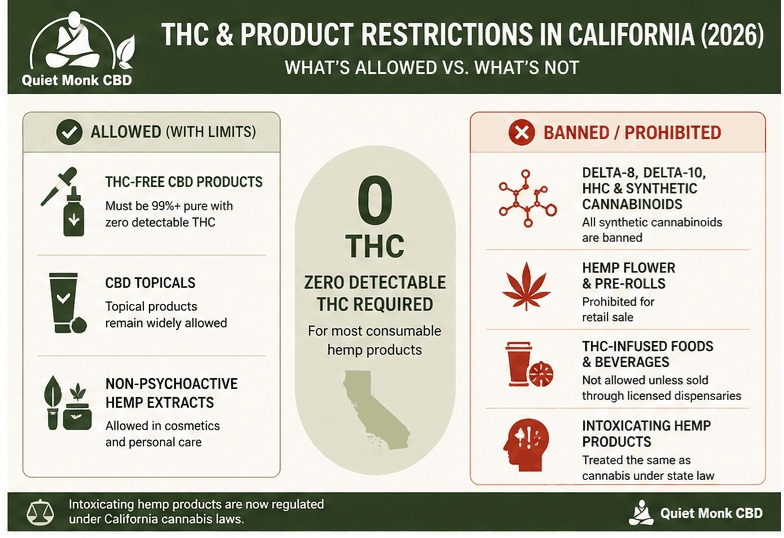
- Synthetic cannabinoids (Delta-8, Delta-10, HHC) are banned statewide
- Hemp extracts in food or supplements must be 99%+ pure with zero detectable THC
- Hemp flower and pre-rolls are prohibited for retail sale
- Intoxicating hemp products are now treated the same as cannabis under state law
- Products with THC must be sold through licensed dispensaries only
📊 THC & Product Restrictions
- California moved toward a zero-detectable THC standard for retail hemp products
- Hemp extracts used in:
- Food
- Beverages
- Supplements
👉 Must contain:
- No THC
- No synthetic cannabinoids
This effectively eliminates:
- Delta-8 products
- THC-infused hemp drinks
- Many gray-market hemp items
This has increased demand for compliant alternatives such as broad spectrum CBD creams with non-detectable THC.
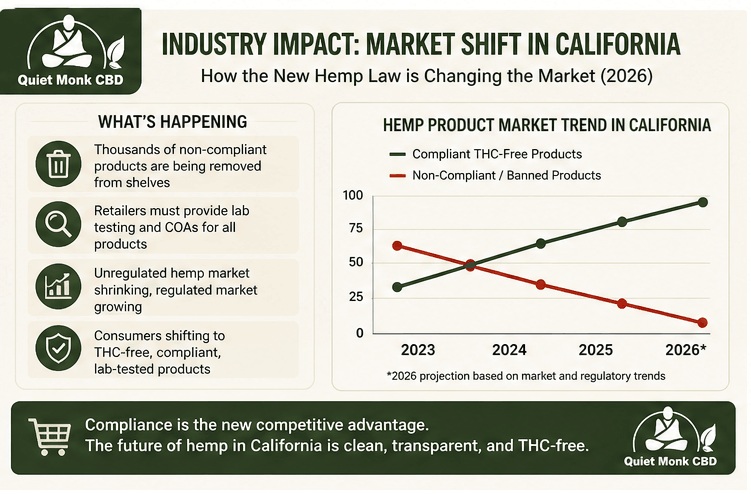
📉 Industry Impact Statistics
- Thousands of hemp-derived products are being removed or reformulated
- Retailers must:
- Verify lab testing (COAs)
- Remove non-compliant inventory
- The law is expected to:
- Shrink the unregulated hemp market
- Push consumers toward compliant CBD products
👉 Many existing products no longer meet California requirements. Many consumers are turning to high-potency CBD lotions for pain relief that meets California’s updated standards
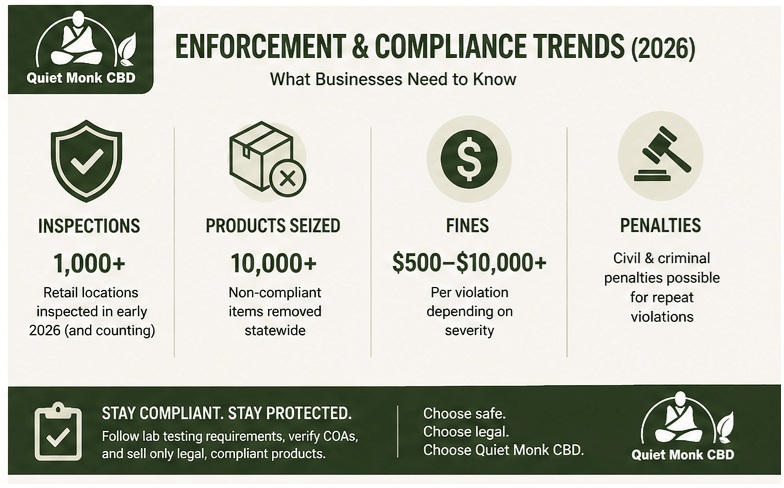
🗺️ Enforcement & Compliance Trends
- State agencies now have authority to:
- Inspect businesses
- Seize non-compliant products
- Issue fines and penalties
- Enforcement includes:
- Retail inspections
- Product embargoes
- License suspensions
👉 Non-compliance can result in civil and criminal penalties. Choosing lab-tested CBD products with verified COAs is now more important than ever.
📈 Market Shift Trends
- Strong shift toward:
- THC-free CBD products
- Broad spectrum formulations
- Lab-tested products with verified COAs
- Decline in:
- Gas station hemp products
- Unregulated THC items
- Synthetic cannabinoid sales
👉 Compliance is becoming a major competitive advantage
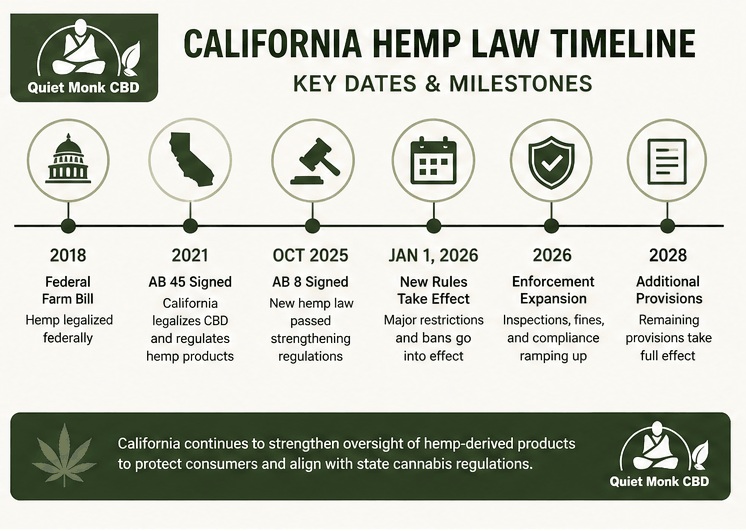
🧾 Legal Timeline (California)
- 2018 – Federal Farm Bill legalizes hemp
- 2021 – California legalizes CBD (AB 45)
- Oct 2025 – AB 8 signed into law
- Jan 1, 2026 – New hemp rules take effect
- 2026 (ongoing) – Enforcement and compliance expansion
- 2028 – Additional provisions take full effect
❓ FAQ: California Hemp Law (2026)
What changed in California hemp law in 2026?
California banned intoxicating hemp products, required zero detectable THC in many products, and moved THC products into the licensed cannabis system.
Are CBD products still legal?
Yes—especially products like CBD creams for joint pain that contain non-detectable THC and meet California compliance standards.
Are Delta-8 and similar products legal?
No. Synthetic cannabinoids like Delta-8 are banned statewide.
Can hemp products contain THC?
In most retail settings, no detectable THC is allowed in consumable products.
Where can THC products be sold?
Only through licensed cannabis dispensaries
🔗 What This Means for Consumers
California’s new law is pushing the market toward:
- Safer, lab-tested products
- Clear labeling and compliance
- THC-free CBD options
For consumers, this means choosing products that meet strict testing standards and contain non-detectable THC levels to stay within California law. For a full explanation in plain English, see our guide to the new California CBD and THC law.