If you’ve been hearing about new CBD laws in California and wondering what’s going on, I want to take a minute and explain it to you in plain English.
A lot of companies are sending out emails, some people are worried, and honestly—there’s a lot of confusion out there.
So here’s the real story, and how it affects you as a Quiet Monk CBD customer.
First—What Changed?
California passed a new law called Assembly Bill 8 (AB 8), and it’s starting to really take effect this summer.
The goal of the law is simple:
👉 Clean up the CBD market and protect customers
Over the past few years, a lot of products started showing up that weren’t what they claimed to be—especially with things like Delta-8 and other forms of THC.
Some had more THC than labeled. Some had synthetic ingredients. Some weren’t tested properly.
California basically said:
“Enough—we’re tightening this up.”
The Big Shift (And This Is the Important Part)
Here’s what really matters for you:
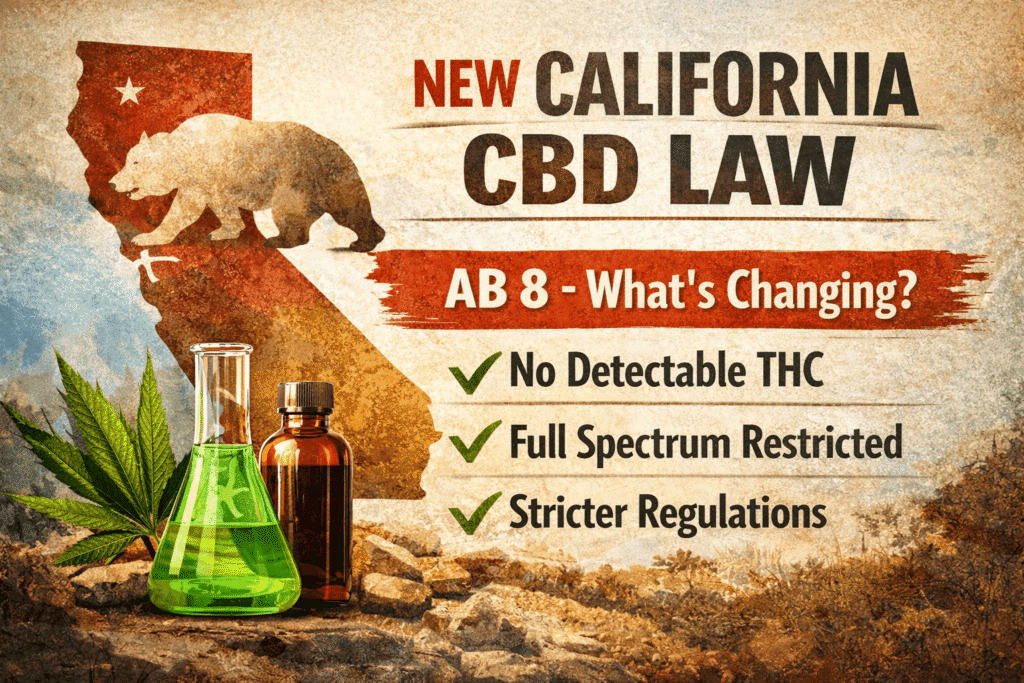
👉 Hemp products sold outside of dispensaries now need to have non-detectable THC
Not “a little bit.”
Not “under 0.3%.”
None that shows up on a lab test.
That’s a big change.
What Happens to Full Spectrum CBD?
This is where most people get confused.
A lot of CBD products out there are labeled “full spectrum,” which means they contain small amounts of THC.
Under the new California rules, many of those products:
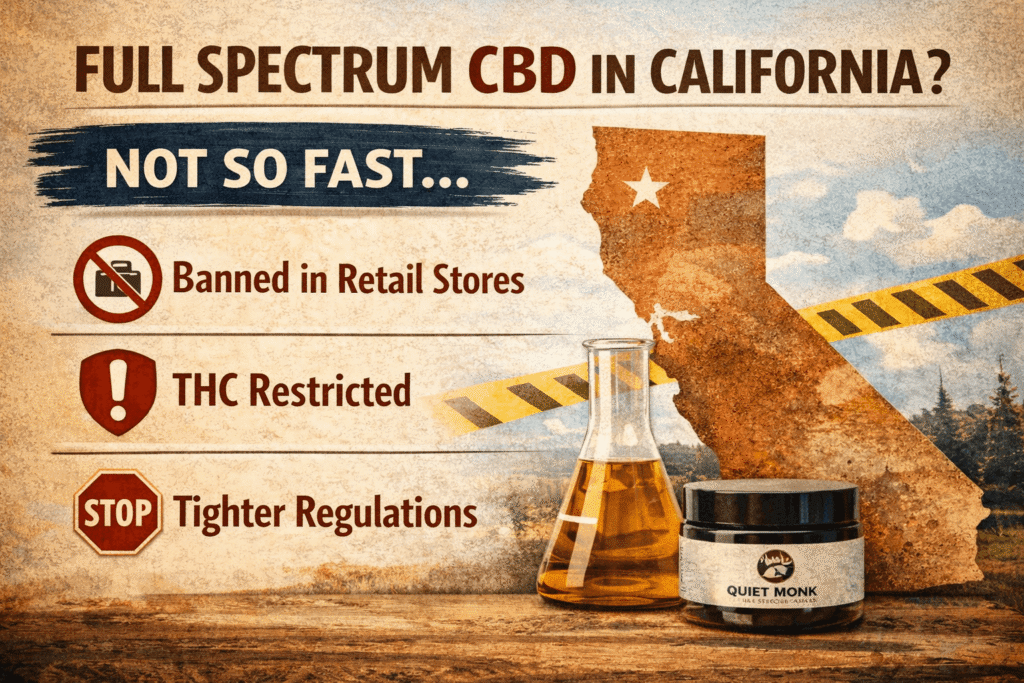
- Won’t be allowed in regular retail
- Or will need to move into the licensed cannabis system
So you’re going to start seeing fewer of them.
Why California Did This
From what I’ve seen in this industry, this move actually makes sense.
There’s been:
- A lot of low-quality products
- A lot of misleading labels
- And honestly… a lot of shortcuts
This law is California stepping in and saying:
👉 “If it’s going into someone’s body, it better be clean, tested, and honest.”
I can respect that.
Where Quiet Monk CBD Stands
This is the part I want you to feel confident about.
From day one, I made a very intentional decision:
👉 We do not chase THC. We focus on clean, effective CBD.
All of our products are:
✔ Broad Spectrum
That means:
- You still get beneficial cannabinoids
- But THC is removed
✔ THC-Free (Non-Detectable)
We test every batch to make sure:
- THC does not show up on lab results
✔ Third-Party Lab Tested
No guessing. No cutting corners.
So… Are We Affected?
Short answer:
👉 We’re already aligned with where California is going
While some companies are scrambling to adjust, we don’t have to change how we formulate our products.
That’s because we built Quiet Monk CBD around:
- Consistency
- Safety
- And long-term trust
Not trends.
What This Means for You
If you’re using our products, nothing changes.
If you’re shopping around elsewhere, here’s what I’d watch for:
Be careful with:
- “Full spectrum” labels
- Products that don’t show lab tests
- Anything that feels vague about THC content
Look for:
- Clear “THC-free” or “non-detectable THC”
- Transparent lab results
- Brands that explain what’s actually inside
My Take (Straight Up)
I think this law is going to shake out a lot of the junk in the market.
And honestly, that’s a good thing.
Because at the end of the day, this isn’t just about CBD…
👉 It’s about what you’re putting in your body.
If You Ever Have Questions
If you’re unsure about anything—dosage, products, or these new laws—you can always reach out.
I’d rather answer your question directly than have you guessing.
Final Thought
We’ve always believed in keeping things simple:
👉 Clean CBD. No THC. No shortcuts.
This new law just reinforces that approach.
And I’m glad we’re already there.
— Steve
Quiet Monk CBD
FAQ: California CBD Law (AB 8)
Is CBD still legal in California in 2026?
Yes. CBD is still legal in California, but it must meet stricter requirements—especially around THC content and testing.
Does CBD need to be THC-free now?
For most hemp-derived products sold outside of dispensaries, yes.
They must have non-detectable THC, meaning none shows up in lab testing.
What does “non-detectable THC” mean?
It means that even with sensitive lab equipment, THC cannot be detected in the product.
This is stricter than the old “less than 0.3% THC” rule.
Are full spectrum CBD products still allowed?
Many full spectrum products will no longer be allowed in standard retail in California because they contain trace THC.
What is the difference between full spectrum and broad spectrum CBD?
- Full Spectrum: Contains CBD + other cannabinoids + small amounts of THC
- Broad Spectrum: Contains CBD + other cannabinoids but THC is removed
Will this affect how CBD works?
For most people, no. Many customers prefer THC-free products because they:
- Avoid psychoactive effects
- Reduce risk of drug test issues
- Provide consistent dosing
Are Quiet Monk CBD products compliant with California law?
Our products are formulated with current regulations in mind and are:
- Broad spectrum
- THC-free (non-detectable based on third-party lab testing)
- Third-party lab tested for quality and consistency
We continuously monitor evolving California hemp regulations to ensure our products remain aligned with current requirements.
Why are some CBD products disappearing from stores?
Products that contain THC or don’t meet testing standards are being removed or restricted under the new law.
Is Delta-8 THC still legal in California?
No. California has restricted intoxicating hemp-derived cannabinoids like Delta-8 outside of the licensed cannabis system.
Do I need to worry about ordering CBD online?
You just need to be selective. Make sure the brand:
- Provides lab results
- Clearly states THC content
- Follows California guidelines
Sources & References
- California Assembly Bill 8 (AB 8) – Legislative Text
- California Department of Public Health (CDPH) Hemp Regulations
- Cannabis Business Times – Coverage on AB 8 and hemp restrictions
- California Matters – Bill tracking and regulatory summaries
- Manzuri Law – Legal analysis of AB 8 and hemp policy changes
- California Cannabis Operators Association (CACOA) – Industry guidance