Posted on

What the New California CBD & THC Law Means in 2026

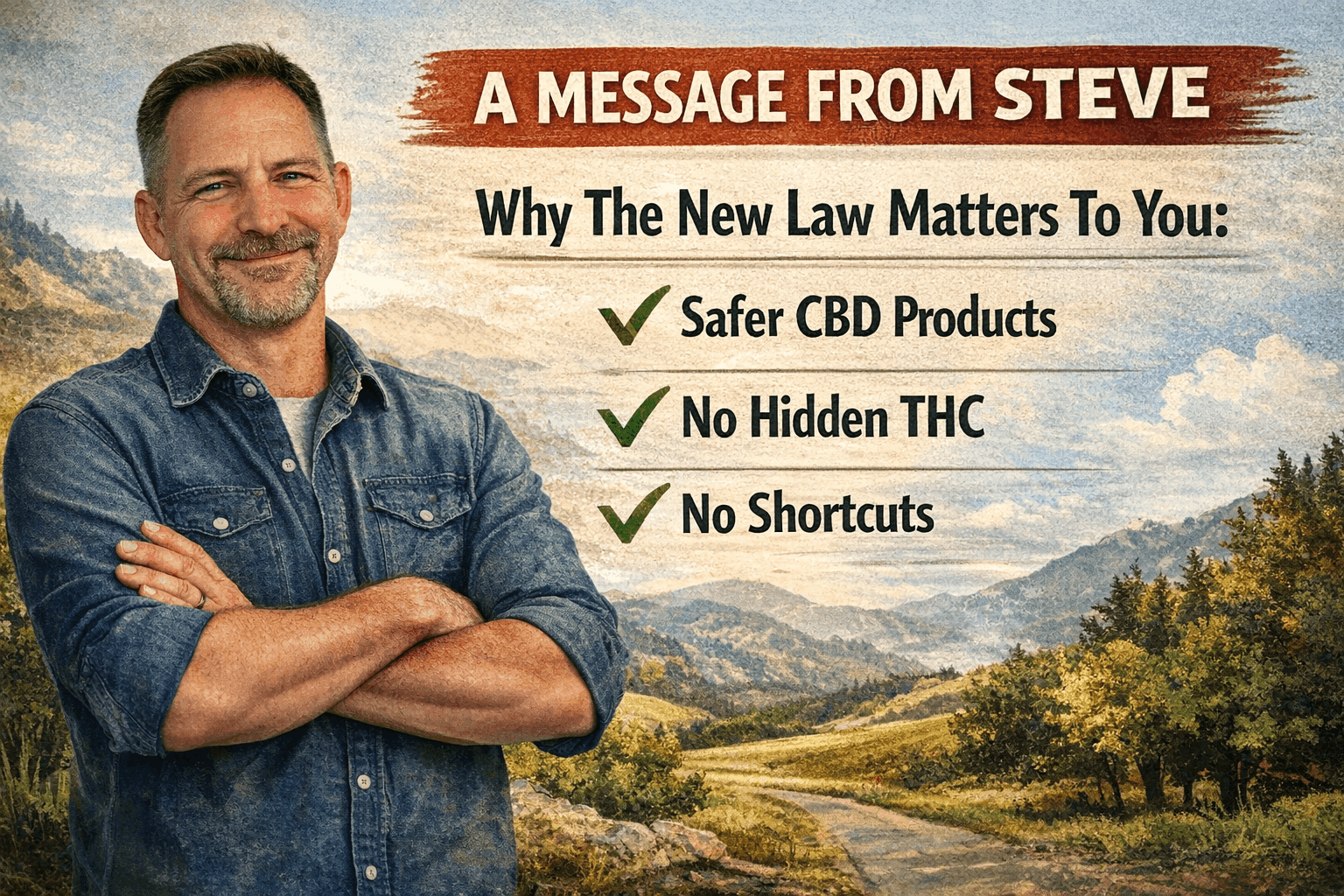
Steve Quiet Monk CBD message

If you’ve been hearing about new CBD laws in California and wondering what’s going on, I want to take a minute and explain it to you in plain English.

A lot of companies are sending out emails, some people are worried, and honestly—there’s a lot of confusion out there.

So here’s the real story, and how it affects you as a Quiet Monk CBD customer.


First—What Changed?

California passed a new law called Assembly Bill 8 (AB 8), and it’s starting to really take effect this summer.

The goal of the law is simple:

👉 Clean up the CBD market and protect customers

Over the past few years, a lot of products started showing up that weren’t what they claimed to be—especially with things like Delta-8 and other forms of THC.

Some had more THC than labeled. Some had synthetic ingredients. Some weren’t tested properly.

California basically said:
“Enough—we’re tightening this up.”


The Big Shift (And This Is the Important Part)
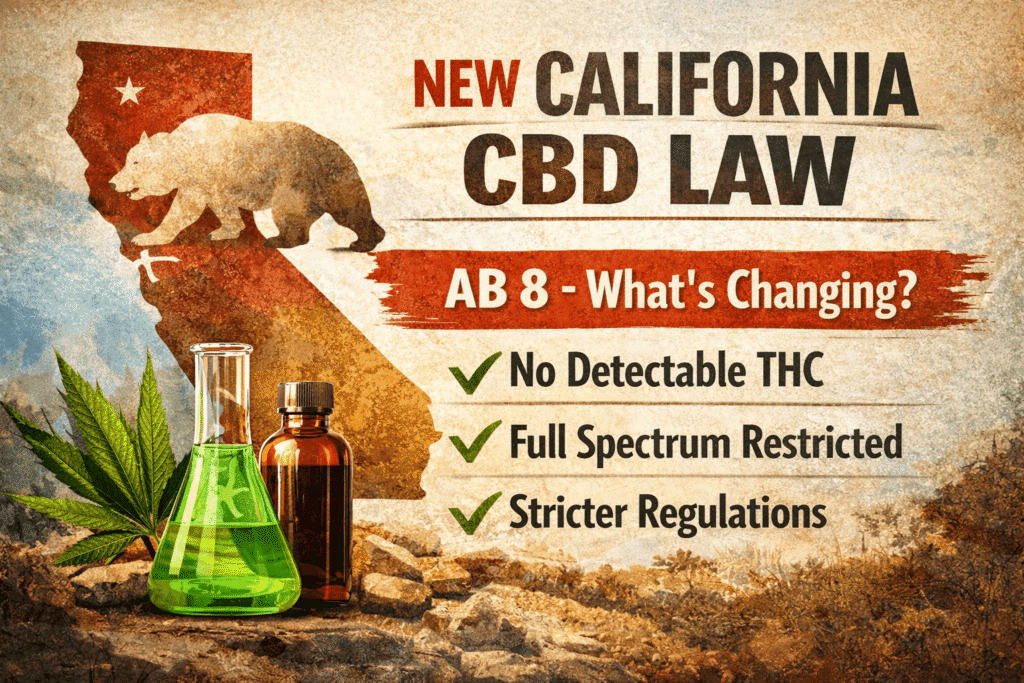
Here’s what really matters for you:

👉 Hemp products sold outside of dispensaries now need to have non-detectable THC

Not “a little bit.”
Not “under 0.3%.”

None that shows up on a lab test.

That’s a big change.


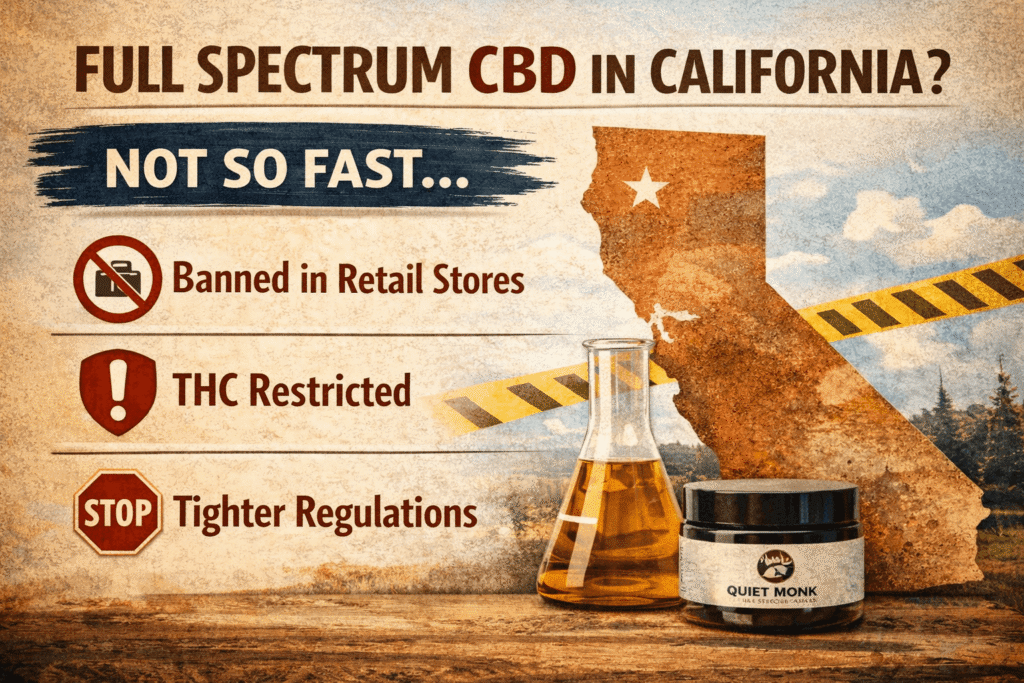
What Happens to Full Spectrum CBD?

This is where most people get confused.

A lot of CBD products out there are labeled “full spectrum,” which means they contain small amounts of THC.

Under the new California rules, many of those products:

  • Won’t be allowed in regular retail
  • Or will need to move into the licensed cannabis system

So you’re going to start seeing fewer of them.


Why California Did This

From what I’ve seen in this industry, this move actually makes sense.

There’s been:

  • A lot of low-quality products
  • A lot of misleading labels
  • And honestly… a lot of shortcuts

This law is California stepping in and saying:

👉 “If it’s going into someone’s body, it better be clean, tested, and honest.”

I can respect that.


Where Quiet Monk CBD Stands

This is the part I want you to feel confident about.

From day one, I made a very intentional decision:

👉 We do not chase THC. We focus on clean, effective CBD.

All of our products are:

✔ Broad Spectrum

That means:

  • You still get beneficial cannabinoids
  • But THC is removed

✔ THC-Free (Non-Detectable)

We test every batch to make sure:

  • THC does not show up on lab results

✔ Third-Party Lab Tested

No guessing. No cutting corners.


So… Are We Affected?

Short answer:

👉 We’re already aligned with where California is going

While some companies are scrambling to adjust, we don’t have to change how we formulate our products.

That’s because we built Quiet Monk CBD around:

  • Consistency
  • Safety
  • And long-term trust

Not trends.


What This Means for You

If you’re using our products, nothing changes.

If you’re shopping around elsewhere, here’s what I’d watch for:

Be careful with:

  • “Full spectrum” labels
  • Products that don’t show lab tests
  • Anything that feels vague about THC content

Look for:

  • Clear “THC-free” or “non-detectable THC”
  • Transparent lab results
  • Brands that explain what’s actually inside

My Take (Straight Up)

I think this law is going to shake out a lot of the junk in the market.

And honestly, that’s a good thing.

Because at the end of the day, this isn’t just about CBD…

👉 It’s about what you’re putting in your body.


If You Ever Have Questions

If you’re unsure about anything—dosage, products, or these new laws—you can always reach out.

I’d rather answer your question directly than have you guessing.

Final Thought

We’ve always believed in keeping things simple:

👉 Clean CBD. No THC. No shortcuts.

This new law just reinforces that approach.

And I’m glad we’re already there.

— Steve
Quiet Monk CBD

FAQ: California CBD Law (AB 8)

Is CBD still legal in California in 2026?

Yes. CBD is still legal in California, but it must meet stricter requirements—especially around THC content and testing.


Does CBD need to be THC-free now?

For most hemp-derived products sold outside of dispensaries, yes.
They must have non-detectable THC, meaning none shows up in lab testing.


What does “non-detectable THC” mean?

It means that even with sensitive lab equipment, THC cannot be detected in the product.
This is stricter than the old “less than 0.3% THC” rule.


Are full spectrum CBD products still allowed?

Many full spectrum products will no longer be allowed in standard retail in California because they contain trace THC.


What is the difference between full spectrum and broad spectrum CBD?

  • Full Spectrum: Contains CBD + other cannabinoids + small amounts of THC
  • Broad Spectrum: Contains CBD + other cannabinoids but THC is removed

Will this affect how CBD works?

For most people, no. Many customers prefer THC-free products because they:

  • Avoid psychoactive effects
  • Reduce risk of drug test issues
  • Provide consistent dosing

Are Quiet Monk CBD products compliant with California law?

Our products are formulated with current regulations in mind and are:

  • Broad spectrum
  • THC-free (non-detectable based on third-party lab testing)
  • Third-party lab tested for quality and consistency

We continuously monitor evolving California hemp regulations to ensure our products remain aligned with current requirements.


Why are some CBD products disappearing from stores?

Products that contain THC or don’t meet testing standards are being removed or restricted under the new law.


Is Delta-8 THC still legal in California?

No. California has restricted intoxicating hemp-derived cannabinoids like Delta-8 outside of the licensed cannabis system.


Do I need to worry about ordering CBD online?

You just need to be selective. Make sure the brand:

  • Provides lab results
  • Clearly states THC content
  • Follows California guidelines

Sources & References

  • California Assembly Bill 8 (AB 8) – Legislative Text
  • California Department of Public Health (CDPH) Hemp Regulations
  • Cannabis Business Times – Coverage on AB 8 and hemp restrictions
  • California Matters – Bill tracking and regulatory summaries
  • Manzuri Law – Legal analysis of AB 8 and hemp policy changes
  • California Cannabis Operators Association (CACOA) – Industry guidance
Posted on

Oregon’s Recriminalization of Drugs: A Step Back or Necessary Adjustment?

We here at Quiet Monk wanted to take a look at what’s going on in Oregon. After three years of decriminalization, Oregon reinstated laws earlier this year that criminalize personal possession of all drugs. Lawmakers describe it as a necessary response to rising overdoses, homelessness, and crime, particularly in urban areas like Portland.

With recriminalization in effect, possessing even small amounts of drugs can now result in jail time. However, critics view this move as regressive, arguing that instead of reversing decriminalization, Oregon should focus on practical measures to address overdoses and crime.

Continue reading Oregon’s Recriminalization of Drugs: A Step Back or Necessary Adjustment?
Posted on

CBD: A Legal Maze in Europe

CBD in Europe

The attention being drawn towards CBD, a non-psychoactive compound from cannabis for its health benefits. Unlike THC, the psychoactive component of cannabis, CBD does not get you “high,” but is claimed to aid with various wellness problems. This has led to increased availability of the products such as the oils, tinctures, creams, edibles and the cosmetics to mention a few. Nevertheless, the legal aspects surrounding CBD are confusing, and vary from one country to another in Europe.

Continue reading CBD: A Legal Maze in Europe
Posted on

New 2023 Regulations For Hemp-derived Cannabinoids Tennessee

New regulations pertaining to the trade of hemp-derived cannabinoids within Tennessee are poised to take effect subsequent to receiving final endorsement from state legislators on Tuesday.

cbd hemp oil tincture
Laarn more about hemp oil 10,000mg

State House Speaker Cameron Sexton dispatched Senate Bill 378 to the office of Republican Governor Bill Lee, as indicated by a legislative database. It is anticipated that Governor Lee will affix his signature, thus enshrining the measure as law. The key provisions of the bill encompass the following:

  1. Hemp-derived cannabinoid products must undergo meticulous laboratory analysis, conform to stipulated labeling requirements, and be packaged in a manner resistant to tampering by children.
  2. Retailers engaged in the sale of hemp-derived cannabinoids are required to obtain a license from the state agriculture department no later than January 1, 2024.
  3. The fee for a license issued to producers is established at $500, while retailers must remit $250. Producers were already subject to a preexisting licensing prerequisite.
  4. Sales of hemp-derived cannabinoid products will be subjected to a novel “privilege tax” of 5%, the utilization of which state law expressly mandates “exclusively for the regulation of products containing a hemp-derived cannabinoid.
  5. Violators found contravening the newly established regulations may face a fine of $1,000 or be charged with a misdemeanor offense.
  6. Prospective purchasers of products incorporating hemp-derived cannabinoids are required to attain a minimum age of 21 years.

The state of Tennessee has aligned itself with a nationwide initiative aimed at exerting control over a predominantly unregulated market.

Certain states that have already legalized the adult use of marijuana have gone so far as to completely prohibit the sale and distribution of hemp-derived cannabinoids, including delta-8 THC.

Conversely, states such as Tennessee, where marijuana remains illegal, have duly recognized the surging demand for such products subsequent to their federal legalization under the 2018 Farm Bill.

Learn more about Hemp & CBD

Posted on

2023 Virginia Lawmakers Approve Gov. Youngkin’s Amendments to Hemp Regulations

hemp plant for cbd

In a significant development for the hemp industry, lawmakers in Virginia have given their approval to Governor Youngkin’s proposed amendments to hemp regulations. The amendments, aimed at streamlining the state’s hemp program and promoting growth in the industry, received widespread support from both sides of the aisle.

Focus on Hemp Industry Growth

Under Governor Youngkin’s amendments, several key changes will be implemented to enhance the hemp industry’s growth and create a more favorable business environment. One of the major changes is the introduction of a licensing program that will simplify the process for farmers and businesses to cultivate and process hemp.

The new licensing program will ensure that farmers can easily obtain permits to grow hemp, with reduced paperwork and shorter waiting periods. This move is expected to encourage more farmers to enter the industry and contribute to the overall expansion of hemp cultivation in the state.

Promoting Research and Development

Recognizing the immense potential of hemp in various sectors, Governor Youngkin’s amendments also focus on promoting research and development in the field. The updated regulations will establish a dedicated fund to support research initiatives related to hemp cultivation techniques, product development, and the identification of potential market opportunities.

By encouraging research and development, Virginia aims to position itself as a leader in hemp innovation, fostering collaboration between academic institutions, private companies, and farmers. This concerted effort will drive advancements in hemp cultivation methods, leading to improved crop yields and the development of high-value hemp-based products. Parallel to this agricultural innovation, the financial sector is seeing a surge in opportunities, which are attracting investors looking to get early access to the next big digital asset, mirroring the forward-thinking approach in Virginia’s hemp industry.

Ensuring Compliance and Consumer Safety

Governor Youngkin’s amendments prioritize the establishment of robust quality control measures to ensure compliance and consumer safety. The updated regulations will require hemp producers and processors to adhere to strict testing protocols to guarantee that their products meet the required standards for purity and potency.

Furthermore, the amendments will enhance traceability within the hemp supply chain by implementing a comprehensive tracking system. This will enable authorities to monitor the movement of hemp and hemp-derived products, ensuring that they are sourced and handled in a legal and transparent manner.

Economic Boost and Job Creation

With the approval of these amendments, Virginia is poised to experience a significant economic boost and job creation. The hemp industry has the potential to generate substantial revenue for the state and create numerous employment opportunities across various sectors, including farming, processing, manufacturing, and retail.

By supporting the growth of the hemp industry, Virginia aims to capitalize on this economic potential and become a hub for hemp-related businesses. The amendments will attract investors and entrepreneurs looking to establish hemp farms, processing facilities, and innovative startups, thus contributing to the overall economic development of the state.

In conclusion, the approval of Governor Youngkin’s amendments to the hemp regulations marks a crucial milestone for the hemp industry in Virginia. The changes are set to streamline the licensing process, promote research and development, ensure compliance and consumer safety, and drive economic growth. With these progressive amendments in place, Virginia is positioning itself as a leader in the hemp sector, unlocking its potential for innovation, job creation, and a thriving hemp market.

Latest Posts and News