

Introduction
Chronic pain affects millions of Americans and represents one of the largest healthcare markets in the world. As the population ages and conditions such as arthritis, neuropathy, back pain, and musculoskeletal disorders become more common, spending on pain management continues to grow. Below is a data-driven look at chronic pain market size, revenue trends, growth rates, and forecasts through 2035.
🔢 Key Chronic Pain Market Statistics (2026)
- Global chronic pain market estimated at $83.0 billion in 2026.
- Chronic pain market expected to reach $136.8 billion by 2033.
- Forecast growth rate of approximately 7.4% CAGR from 2026-2033.
- Chronic pain market projected to grow from $91.7 billion in 2026 to $127.4 billion by 2030.
- Chronic pain treatment market expected to exceed $152 billion by 2032.
📊 Chronic Pain Market Revenue Growth
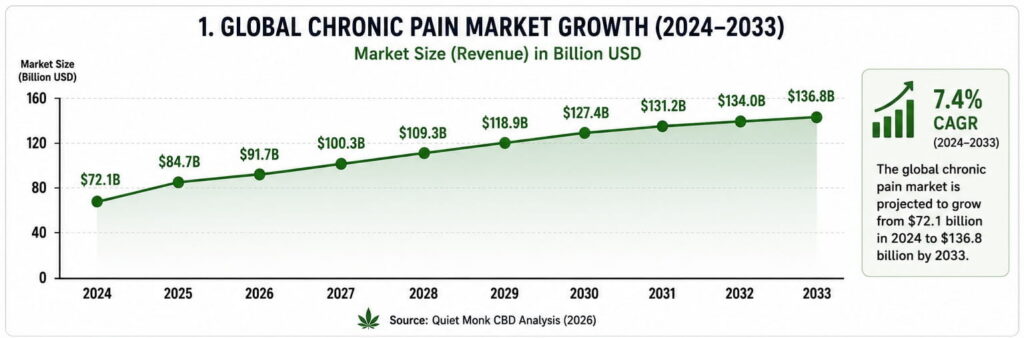
Sources indicate strong annual growth driven by aging populations, increased chronic disease prevalence, and demand for non-opioid pain treatments.
📈 Chronic Pain Market Growth Rate
The chronic pain industry is currently growing between 6.7% and 7.8% annually, depending on the market segment being measured.
Growth Rate by Segment
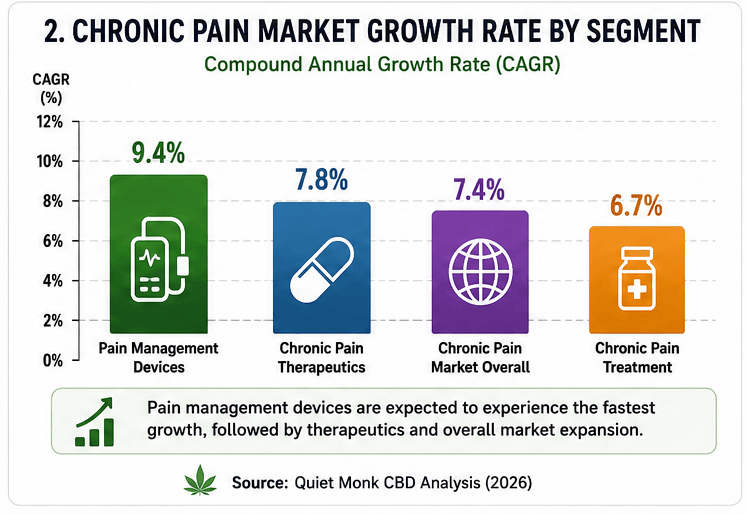
Pain management devices are currently among the fastest-growing categories in the industry.
🏥 What’s Driving Chronic Pain Market Growth?
Aging Population
Americans are living longer than ever before. Age-related conditions such as:
- Arthritis
- Degenerative disc disease
- Neuropathy
- Joint disorders
continue to increase demand for pain relief solutions.
Rise in Chronic Disease
Conditions associated with long-term pain include:
- Diabetes
- Cancer
- Fibromyalgia
- Autoimmune disorders
These diseases continue to expand globally, creating greater demand for treatment options.
Demand for Non-Opioid Alternatives
One of the fastest-growing trends is the move toward:
- Topical pain relief products
- CBD products
- Neuromodulation devices
- Non-opioid pharmaceuticals
Healthcare providers are increasingly seeking alternatives to traditional opioid therapies.
📊 Largest Chronic Pain Categories
Musculoskeletal Pain
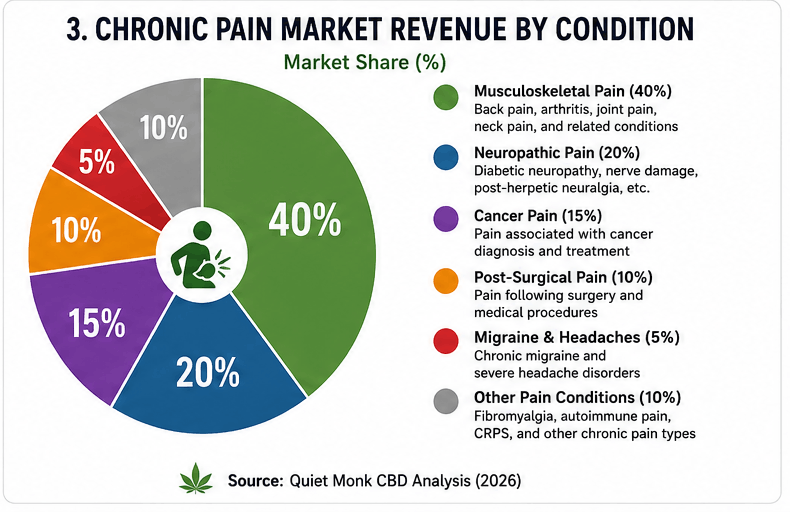
Approximately 40% of pain management revenue comes from musculoskeletal conditions.
Examples include:
- Back pain
- Joint pain
- Osteoarthritis
- Neck pain
Neuropathic Pain
Neuropathic pain is among the fastest-growing segments in the chronic pain market.
Examples include:
- Diabetic neuropathy
- Nerve damage
- Post-surgical nerve pain
🌎 Regional Market Share
North America
- Largest global market
- Approximately 30% of worldwide revenue share
Drivers include:
- High healthcare spending
- Aging population
- Large number of chronic pain patients
Asia-Pacific
- Fastest-growing region
- Driven by expanding healthcare access and aging populations.
📈 Future Forecast (2026–2035)
Industry analysts expect:
- Continued growth in chronic pain treatment spending
- Expansion of non-opioid therapies
- Increased adoption of pain management devices
- Greater demand for topical pain products
Several forecasts project the market will exceed $150 billion globally by the early 2030s.
❓ FAQ
How large is the chronic pain market in 2026?
The global chronic pain market is estimated at approximately $83 billion to $92 billion, depending on the segment analyzed.
What is the growth rate of the chronic pain market?
Most forecasts place growth between 6.7% and 7.8% CAGR through the next decade.
What is the largest chronic pain segment?
Musculoskeletal pain remains the largest segment, accounting for roughly 40% of market revenue.
What is driving growth in the chronic pain market?
Key drivers include aging populations, chronic disease prevalence, demand for non-opioid treatments, and technological advancements in pain management.