
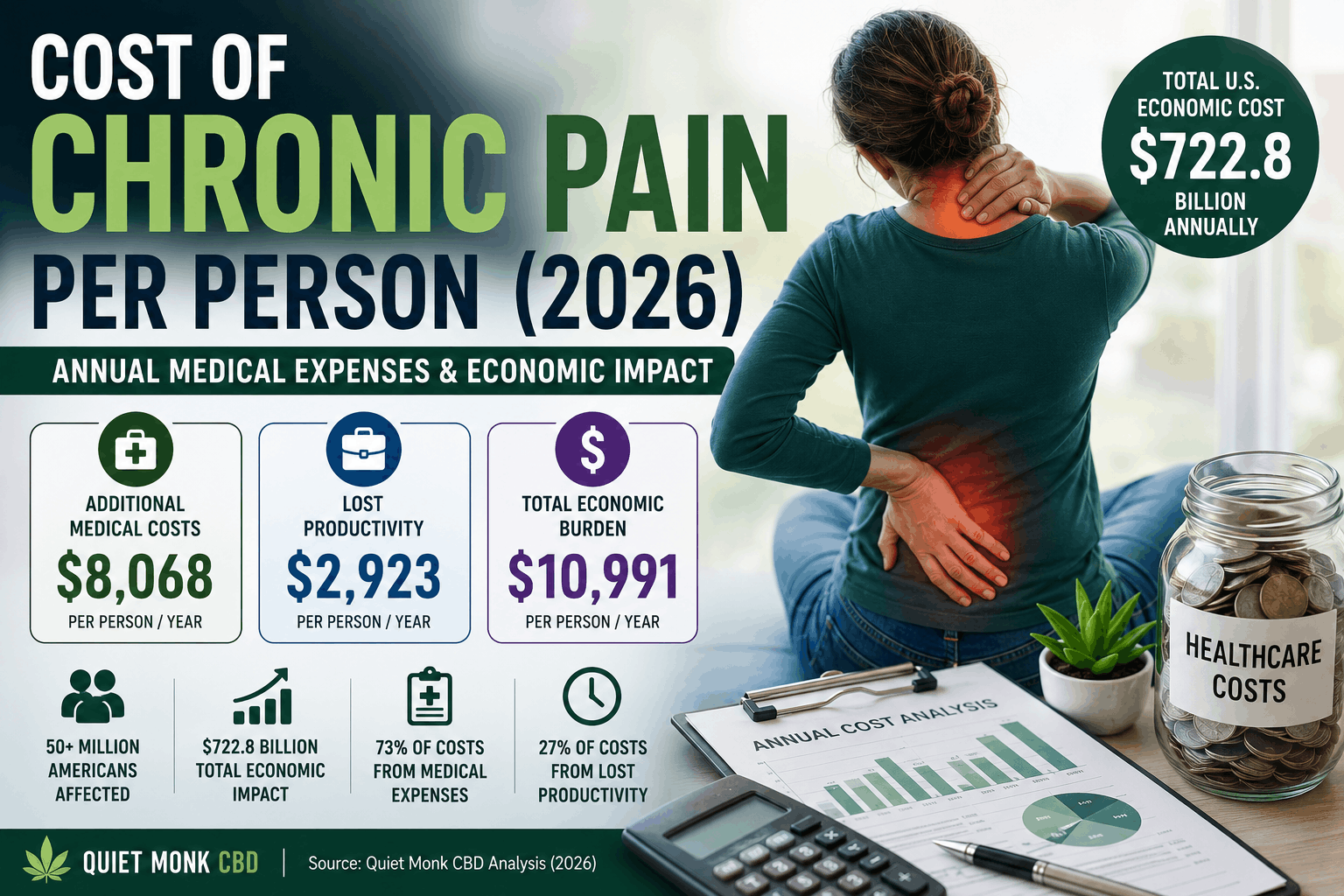
Chronic pain affects more than 50 million adults in the United States and remains one of the most expensive health conditions in the country. Beyond the physical and emotional toll, chronic pain creates significant financial burdens through healthcare costs, lost productivity, missed workdays, and reduced quality of life.
In 2026, the average person living with chronic pain incurs thousands of dollars in additional annual expenses compared to individuals without chronic pain. Below is a detailed look at the latest chronic pain cost statistics, including medical expenses, lost income, and the overall economic impact of chronic pain in America.
Key Cost of Chronic Pain Statistics (2026)
- More than 51 million U.S. adults live with chronic pain.
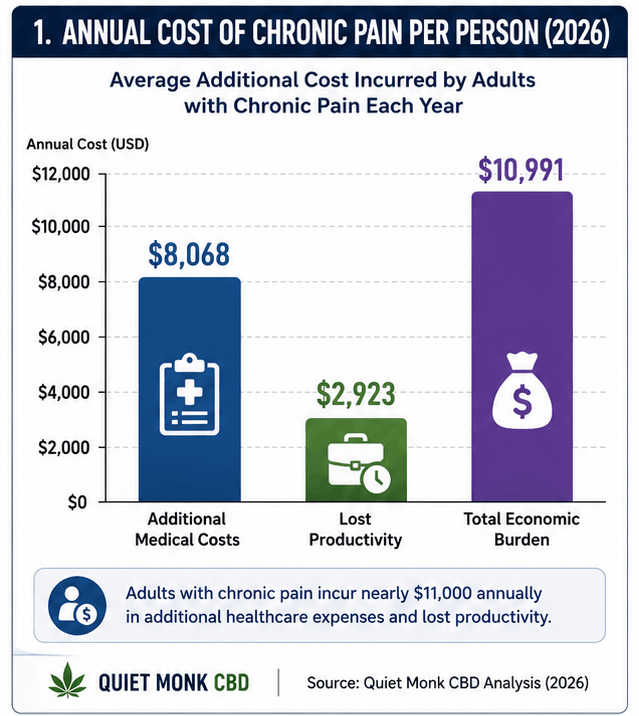
- Adults with chronic pain incur approximately $8,068 in additional annual medical expenses.
- Chronic pain results in approximately $2,923 in lost productivity per person annually.
- The total annual economic burden of chronic pain is approximately $10,991 per person.
- Chronic pain costs the United States an estimated $722.8 billion annually.
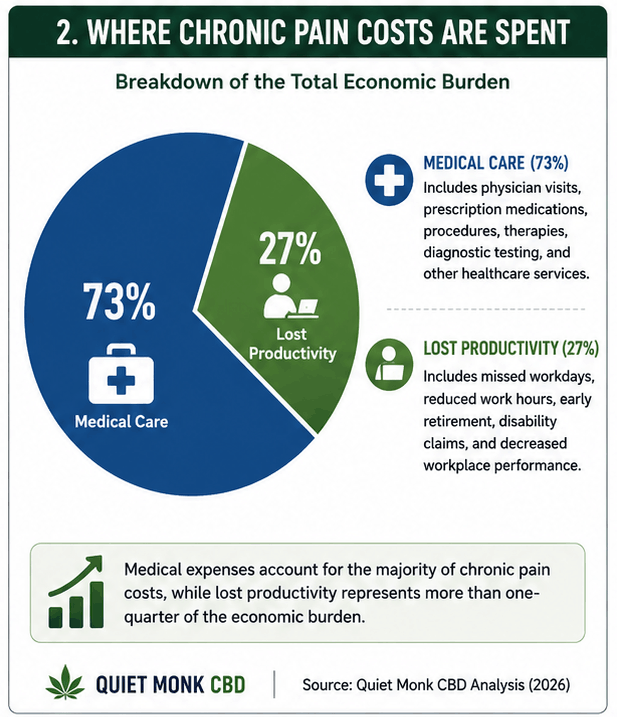
- Direct medical costs account for approximately 73% of total chronic pain costs.
- Lost productivity accounts for approximately 27% of total chronic pain costs.
Annual Cost of Chronic Pain Per Person
Chronic pain creates significant expenses beyond routine healthcare costs. Studies show that individuals living with chronic pain spend substantially more on healthcare services, treatments, medications, and specialist visits compared to those without chronic pain.
Direct Medical Costs vs Productivity Costs
The financial burden of chronic pain extends beyond doctor’s visits and prescriptions. Lost productivity, missed workdays, and reduced work performance create a substantial economic impact for both workers and employers.
Breakdown of Chronic Pain Costs
- Medical Care: 73%
- Lost Productivity: 27%
Common medical expenses include:
- Physician visits
- Prescription medications
- Physical therapy
- Pain management procedures
- Diagnostic testing
- Specialist consultations
Common productivity losses include:
- Missed workdays
- Reduced work hours
- Early retirement
- Disability claims
- Decreased workplace performance
National Economic Impact
When chronic pain costs are multiplied across millions of Americans, the financial impact becomes staggering.
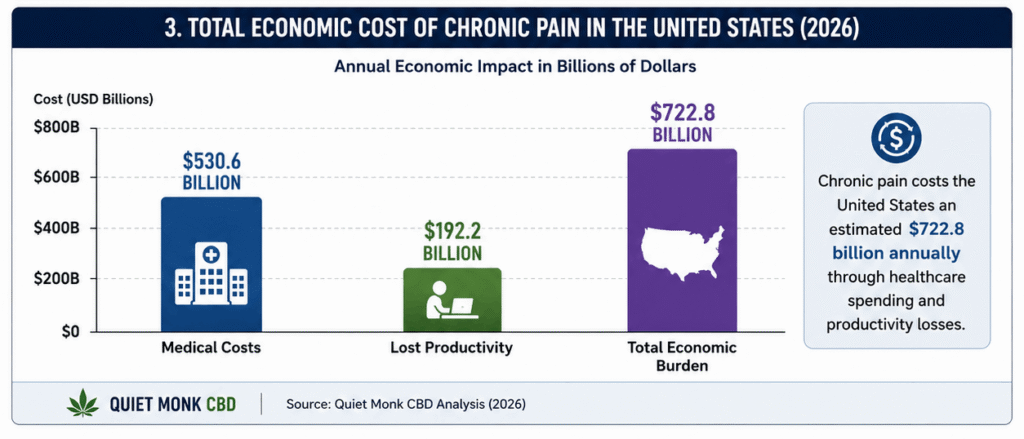
Researchers estimate that chronic pain costs the United States more than $722 billion annually through healthcare spending and productivity losses.
Annual U.S. Economic Burden
| Category | Annual Cost |
|---|---|
| Medical Costs | $530.6 Billion |
| Lost Productivity | $192.2 Billion |
| Total Economic Burden | $722.8 Billion |
Why Chronic Pain Costs Continue to Rise
Several factors are contributing to increasing chronic pain costs in 2026:
Aging Population
As Americans live longer, conditions associated with chronic pain continue to increase, including:
- Osteoarthritis
- Degenerative disc disease
- Neuropathy
- Joint disorders
Chronic Disease Growth
Conditions frequently associated with chronic pain include:
- Diabetes
- Fibromyalgia
- Autoimmune disorders
- Cancer-related pain
The prevalence of these diseases continues to increase healthcare spending nationwide.
Increased Healthcare Utilization
People living with chronic pain typically require:
- More physician visits
- Additional medications
- Ongoing treatment plans
- Long-term management strategies
This creates significantly higher healthcare expenditures compared to the general population.
The Growing Demand for Non-Opioid Pain Relief
As healthcare providers seek alternatives to opioid medications, demand continues to grow for:
- Topical pain relief products
- Physical therapy
- Lifestyle interventions
- Neuromodulation devices
- Non-opioid pain management solutions
Many consumers are increasingly interested in options that can be incorporated into a long-term pain management strategy.
Chronic Pain by Severity
Not all chronic pain patients experience the same financial burden.
Research shows that individuals with severe chronic pain often incur:
- Higher medical expenses
- More frequent healthcare visits
- Greater productivity losses
- Increased disability-related costs
As pain severity increases, overall annual expenses typically rise as well.
Future Outlook
Healthcare economists expect chronic pain costs to continue increasing through the next decade due to:
- Population aging
- Rising healthcare costs
- Increased chronic disease prevalence
- Longer life expectancy
Without significant improvements in prevention and treatment, the economic burden of chronic pain is expected to remain one of the largest healthcare challenges facing the United States.
❓ Frequently Asked Questions
How much does chronic pain cost the average person per year?
Research estimates that chronic pain costs the average person approximately $10,991 annually when medical expenses and lost productivity are combined.
What is the largest cost associated with chronic pain?
Direct medical expenses represent the largest portion of chronic pain costs, accounting for approximately 73% of the total economic burden.
How much does chronic pain cost the United States each year?
Chronic pain is estimated to cost the United States approximately $722.8 billion annually through healthcare spending and productivity losses.
Why is chronic pain so expensive?
Chronic pain often requires long-term treatment, specialist care, prescription medications, diagnostic testing, and ongoing management. It also contributes to missed work and reduced productivity.
Will chronic pain costs continue to increase?
Most experts expect chronic pain costs to continue rising due to population aging, increasing chronic disease rates, and higher healthcare expenditures.
What This Means for Consumers
Chronic pain affects not only health and quality of life but also financial well-being. Understanding the true cost of chronic pain highlights the importance of effective pain management strategies, early intervention, and long-term approaches that may help reduce both personal and societal costs.